Reinventing Modern Medicine: How Todd Perman’s Getting Higher Returns With Preventative Medicine on 9×90™ (#56)
Listen to this episode using your favorite app


⚖️ Legal Disclaimer
All opinions expressed by the guests are their own. 9×90™ and its affiliates do not endorse or guarantee any specific outcomes discussed in this episode. This podcast is for informational and entertainment purposes only and does not constitute financial, legal, or investment advice. Listeners should conduct their own due diligence and consult with professional advisors before making any investment or business decisions. Nothing discussed in this episode constitutes an offer to sell, or a solicitation of an offer to buy, any securities. Any such offer or solicitation will be made only through official offering documents and to qualified, accredited investors, in accordance with applicable securities laws. The views expressed by guests are their own and do not necessarily reflect those of the host or 9×90™.
About this episode
This isn’t just another healthcare discussion — it’s a paradigm shift in how medicine is monetized. Todd Perman is showing investors, clinicians, and founders that the financial future of healthcare lies in prevention, not repair — and he’s proving it at scale.
For decades, the U.S. healthcare system has been locked in a “break-fix” mindset — waiting for disease to advance before profiting from treatment. Todd Perman, CEO & General Partner of Seed Healthcare, has cracked the code on something bigger: making preventative medicine exponentially more profitable than the old model.
With a $100M venture fund and a portfolio focused on early disease detection, disruptive diagnostics, and lifestyle-enhancing therapies, Todd is proving that the economics of prevention can not only work — they can outperform the entrenched, reactive system.
In this high-stakes 9×90™ conversation, Todd and Adi go deep into the science, the economics, and the personal motivations driving this transformation — and reveal the hidden market forces that have been holding medicine back for decades.
If you’re an investor seeking market-defining opportunities, a founder with disruptive healthcare tech, or a policymaker who understands the urgency of systemic change — this episode will give you the framework and conviction to act.
About this guest
For those of you who do not know Todd Perman, he is the CEO and General Partner of Seed Healthcare, a $100M venture fund investing in disruptive healthcare companies focused on early disease detection and prevention. The fund is aligned with UN Sustainable Development Goals and global impact investment fund frameworks.
With over 30 years of experience spanning clinical care, real estate, and investment banking—including leadership roles at Stryker and Newmark—Todd has become a leading force in reshaping healthcare from reactive to proactive.
He also serves on the boards of mission-driven health companies.
About the fund
Connect with this guest
Pitch Your Company: deals@seedhealthcare.com
Investor Inquiries: ir@seedhealthcare.com
Learn More: SeedHealthcare.com
Podcast: Kill or Cure
Thank You to Our Sponsors
Heritage Real Estate Fund™
Orchestrating multi-million-dollar investment strategies with surgical precision, HREF’s insight and execution is virtually unmatched. This Invite-only CRE fund provides investors with exclusive access to off market opportunities, a 110 year legacy & all-star operators. HREF’s approach is built on five generations of real estate expertise and a consistent track record of success investing in real estate across the US.
Molo9™ – The Proven Path to Profit
The go-to software for founders and fractional CMOs ready to scale. Molo9™ maps your fastest route to revenue, helping you craft intelligent, high-converting marketing campaigns without wasting time or budget.


Tools of Marketing Titans™
A comprehensive guide featuring over 90 actionable marketing projects from global experts who have built and led renowned brands, generating billions in revenue. This resource offers practical strategies to accelerate growth, including insights on leveraging AI tools like ChatGPT for sustainable revenue.
Show Notes Generated by Gemini
These show notes were generated by AI
- Cracking the Profit Code — How Seed Healthcare structures investments so that preventative solutions generate outsized financial returns while saving lives and reducing long-term costs.
- Exponential vs. Incremental — Why the gains from preventing chronic disease vastly outweigh the profits from treating it late — and the technology making this shift possible.
- Personal ‘Why’ — Todd’s family history of heart disease and cancer, and Adi’s research into non-invasive coronary treatments, show how personal stakes drive strategic vision.
- Disrupting Entrenched Interests — How political pressure, Big Pharma acquisitions, and legacy revenue streams have historically suppressed preventative breakthroughs.
- The Kidney Care Example — How early detection and lifestyle-oriented dialysis alternatives could unlock billions in value while radically improving patient outcomes.
- Longevity as an Asset — Todd’s personal approach to health, biomarkers, and physical performance — treating vitality as a compounding investment.
- Aligned Capital Only — Why Seed Healthcare works exclusively with investors who share a deep commitment to healthcare’s future — and how that alignment drives market-beating performance.
- Boardroom as a Growth Engine — How Seed Healthcare’s hands-on governance accelerates commercialization without unnecessary capital dilution.
Thank You to Our Sponsors
Heritage Real Estate Fund™
Orchestrating multi-million-dollar investment strategies with surgical precision, HREF’s insight and execution is virtually unmatched. This Invite-only CRE fund provides investors with exclusive access to off market opportunities, a 110 year legacy & all-star operators. HREF’s approach is built on five generations of real estate expertise and a consistent track record of success investing in real estate across the US.
Molo9™ – The Proven Path to Profit
The go-to software for founders and fractional CMOs ready to scale. Molo9™ maps your fastest route to revenue, helping you craft intelligent, high-converting marketing campaigns without wasting time or budget.
Tools of Marketing Titans™
A comprehensive guide featuring over 90 actionable marketing projects from global experts who have built and led renowned brands, generating billions in revenue. This resource offers practical strategies to accelerate growth, including insights on leveraging AI tools like ChatGPT for sustainable revenue.
Transcript
This transcription was generated by Gemini & edited by ChatGPT
Adi Soozin: Hello everyone, and welcome to another episode of 9×90™. Today we have a very special guest with us, recommended by Parker Detweiler. For those of you who don’t know Todd, he is the CEO and General Partner of Seed Healthcare, a $100 million venture fund investing in disruptive healthcare companies focused on early disease detection and prevention.
For those who heard our episode with the Weizmann Institute, you know how much of a game-changer this sector is. Prevention is at the forefront of global health. If you go to China, you’ll see they’re already using preventative medicine at scale—they barely have hospitals left. The U.S. really has to catch up, and Todd is helping to bring our system into the 21st century with the companies he’s investing in.
The fund is aligned with UN Sustainable Development Goals and global impact investment frameworks. With over 30 years of experience spanning clinical care, real estate, and investment banking—including leadership roles at Stryker and Newark—Todd has become a leading force in reshaping healthcare from reactive to proactive. He also serves on the boards of mission-driven health companies. Todd, thank you so much for joining us.
Todd Perman: Hi Adi, thanks for having me on the show. I really appreciate it. I didn’t realize how committed you are to voicing the challenges of preventative care—what’s working and what isn’t. At Seed, our theory of change is centered around diagnostics and process of care, and a lot of what’s being done overseas hasn’t yet made its way to the U.S. Our value is really in bringing global technology here and driving change at the point of care.
As a venture fund, many firms aren’t very active once they invest. We’re the opposite—we’re very hands-on. We want to see the change happen.
Adi Soozin: What I think is so interesting is that you’re combining your knowledge of clinical care with investment banking. A lot of people come into this space wanting to bring preventative technologies to market, but they don’t think about how to make it profitable. They don’t realize you need a financially beneficial model for companies to actually adopt preventative approaches. You’ve figured out how to identify companies that make it more profitable to prevent disease than to treat it.
Todd Perman: That’s exactly right. In my 34 years of healthcare, the biggest challenge has been the “break-fix” model, where diseases aren’t caught early enough. Every year, 18 million people worldwide die of heart disease—and most of them don’t even know they have it. Too often, the first heart attack is the last.
But when you look at today’s computing power, AI overlays of CT imaging and MRIs, and advanced diagnostics, you start to see how we can catch disease early. And here’s the key: most people assume that early detection just means you’re sitting on a ticking time bomb. That’s not true. If you catch a disease early enough, you can often reverse it. Environmental changes, therapeutic interventions, and lifestyle adjustments can create completely different outcomes.
The reality is that if a doctor can’t measure something, most patients won’t act on it. If a doctor just says, “You have heart disease, you have high cholesterol,” it doesn’t create urgency. But if they can show a patient exactly how much blockage is in an artery, then it becomes real, and patients—and doctors—start driving change.
At Seed, we believe enabling technology drives outcomes, but physicians have to lead those outcomes. We’re pushing healthcare to move away from break-fix and toward preventative care, especially at the point of care.
Nobody really does the math, but the cost difference is staggering. A heart attack costs the system hundreds of thousands of dollars. Catching early-stage heart disease and treating it with low-cost therapeutics or environmental changes is exponentially cheaper—and often reversible.
In my own family, we have a history of heart disease and cancer. I’ve been fortunate not to have either, but I monitor myself every year with full screening programs to eliminate major risks. That philosophy drove our earliest investments. We began by investing family office capital in companies that could do this type of preventative screening and care, and over time that grew into what is now our venture fund.
Adi Soozin: I love that you’re using heart disease as the example. I don’t know if you knew this, but my undergraduate thesis in medicinal biological chemistry was on a non-invasive cure for coronary artery disease.
Todd Perman: Really? What was the premise of that?
Adi Soozin: We found that an IV drip of glycolic acid—vitamin C could also be used, though less effectively—broke down calcium deposits so the body could flush them out naturally.
Todd Perman: That’s exactly the premise. Natural supplements like fish oils can also be reversionary for heart disease—they flush out deposits. One company we invested in, through my family office, is developing a therapeutic that attaches to what’s called “7-keto cholesterol” and removes it from the body. It’s an approach that could change the way we treat not just heart disease, but also conditions like Alzheimer’s.
Thank You to Our Sponsors
Heritage Real Estate Fund™
Orchestrating multi-million-dollar investment strategies with surgical precision, HREF’s insight and execution is virtually unmatched. This Invite-only CRE fund provides investors with exclusive access to off market opportunities, a 110 year legacy & all-star operators. HREF’s approach is built on five generations of real estate expertise and a consistent track record of success investing in real estate across the US.
Molo9™ – The Proven Path to Profit
The go-to software for founders and fractional CMOs ready to scale. Molo9™ maps your fastest route to revenue, helping you craft intelligent, high-converting marketing campaigns without wasting time or budget.
Tools of Marketing Titans™
A comprehensive guide featuring over 90 actionable marketing projects from global experts who have built and led renowned brands, generating billions in revenue. This resource offers practical strategies to accelerate growth, including insights on leveraging AI tools like ChatGPT for sustainable revenue.
Adi Soozin: Hello everyone, and welcome to another episode of 9×90. Today we have a very special guest with us, recommended by Parker Deweiler: Todd Perman. For those who don’t know Todd, he is the CEO and General Partner of Seed Healthcare, a $100 million venture fund investing in disruptive healthcare companies focused on early disease detection and prevention.
If you listened to our episode with the Weizmann Institute, you already know how much of a game-changer this sector is. Prevention is at the forefront for us. If you look at China, they’re already using preventative medicine at scale — they barely even have hospitals left. The U.S. really needs to catch up, and Todd is helping us get into the 21st century with the medical companies he’s investing in.
Seed Healthcare is aligned with the UN Sustainable Development Goals and global impact investment frameworks. Todd brings more than 30 years of experience spanning clinical care, real estate, and investment banking.
Adi Soozin: You’re an investment banker? That’s cool.
Todd Perman: Yeah — don’t tell anybody though. I’m recovering.
Adi Soozin: Including leadership roles at Stryker and Newark, Todd has become a leading force in reshaping healthcare from reactive to proactive. He also serves on the boards of mission-driven health companies. Todd, thank you so much for joining us.
Todd Perman: Hi Adi, thanks for having me on the show. I really appreciate it. I didn’t realize how committed you are to voicing the challenges of preventative care — what’s happening and what’s not happening. At Seed, our theory of change is all about diagnostics and processes of care, and bringing over technologies from overseas that aren’t yet being used here. Our real value comes from that knowledge and those relationships, which drive change at the point of care.
As a venture fund, we’re very hands-on. Many funds invest passively, but we want to make sure change actually happens.
Adi Soozin: What I find interesting is that you’re combining deep clinical knowledge with investment banking. A lot of people say, “I’m going to bring preventative medicine to market,” but they don’t think about how to make it profitable. Companies curing diseases have no financial incentive to pivot to prevention. You’ve found a way to identify companies that make prevention more profitable than break-fix medicine.
Todd Perman: Exactly. In my 34 years in healthcare, the biggest challenge has been the break-fix model — diseases aren’t caught early enough. Eighteen million people die of heart disease every year worldwide. Most of them don’t even know they have it. For too many, the first heart attack is also the last.
But today, with computing power, AI overlays on CT scans and MRIs, and advanced diagnostics, we can actually catch disease much earlier. And if you catch it early enough, you can often reverse it. People think once you’re diagnosed, it’s a ticking time bomb, but that’s not the case. Environmental and lifestyle changes can create meaningful outcomes.
The issue is measurement. If doctors can’t measure something, they often don’t act. If a doctor simply says, “You have high cholesterol,” it doesn’t always drive urgency. But if you can show a patient that they have a specific blockage in an artery, then both the doctor and patient are motivated to act.
That’s why enabling technology is so critical. Physicians need tools that make prevention measurable, actionable, and outcomes-driven.
From a payer perspective, no one runs the math. A single heart attack can cost hundreds of thousands of dollars. But if you catch early-stage heart disease, many outcomes can be improved with therapeutics or even simple environmental changes. That’s far more cost-effective.
In my own family, we have a history of heart disease and cancer. I’ve been fortunate so far, but I monitor myself annually with comprehensive screenings to eliminate major risks. That’s exactly the kind of technology we’re investing in. We began with one company offering full-spectrum screening, and after scaling that through our family office, we launched a venture fund to expand our impact.
Adi Soozin: I love that you’re using heart disease as an example. My final thesis in medicinal biological chemistry was actually on a non-invasive cure for coronary artery disease.
Todd Perman: Really? What was your thesis?
Adi Soozin: We discovered that an IV drip of glycolic acid — or vitamin C, though less effective — could break down calcium deposits so the body could flush them out.
Todd Perman: That’s exactly the premise. Fish oils and other natural supplements can have reversionary effects on heart disease by helping to flush plaque. There are also therapeutics being developed. One I invested in through my family office works like a “cyclone” in the arteries. It binds to 7-keto cholesterol — the toxic cholesterol that hardens into plaque, much like amyloid plaques in the brain that cause dementia and Alzheimer’s — and removes it through the urine.
It’s in safety trials in Australia now, with very promising results. Phase II will be the real test, but if successful, it could be the holy grail. Our interventional cardiologists even joke it would put them out of business — but the right kind of surgeons welcome that. They just want to fix and reverse disease. That’s who gravitates to Seed.
Adi Soozin: It’s funny you say that. My professor, who oversaw my thesis, told me “game over” when we proved the treatment worked. At 21, I didn’t understand the economics of curing one of America’s biggest killers. He explained that if it reached market, most cardiac surgeons would be put out of business.
Later, a friend of mine at Harvard discovered a cure for kidney cancer. A pharmaceutical company bought her research and shut it down.
Todd Perman: Unfortunately, that happens all the time. When I was at Stryker, and earlier at U.S. Surgical, I saw Medtronic and others buy companies just to bury their IP. Big firms aren’t product innovators anymore — they’re sales engines. True innovation often comes from smaller, agile companies working directly with physicians.
Take kidney care, for example. The U.S. spends about $400 billion annually treating kidney disease. That’s half the global market. We work with one of the largest nephrology groups in the country — 1,200 physicians across 600 locations. Their mission is to catch kidney disease and related cancers early, so patients never reach dialysis.
Compare that to companies like Fresenius and DaVita, which profit from keeping patients on dialysis. Once you’re on it, the only way off is a transplant. That creates a perpetual funnel of expense.
Prevention flips the economics. Testing, diagnostics, and gene mapping catch disease early and reduce costs. Physicians increasingly want this shift. Government policy is still behind, but value-based care is gaining traction.
Adi Soozin: We got a little sidetracked, but those are the conversations that make this fun.
Todd Perman: Exactly — it means it’s a good one.
Thank You to Our Sponsors
Heritage Real Estate Fund™
Orchestrating multi-million-dollar investment strategies with surgical precision, HREF’s insight and execution is virtually unmatched. This Invite-only CRE fund provides investors with exclusive access to off market opportunities, a 110 year legacy & all-star operators. HREF’s approach is built on five generations of real estate expertise and a consistent track record of success investing in real estate across the US.
Molo9™ – The Proven Path to Profit
The go-to software for founders and fractional CMOs ready to scale. Molo9™ maps your fastest route to revenue, helping you craft intelligent, high-converting marketing campaigns without wasting time or budget.
Tools of Marketing Titans™
A comprehensive guide featuring over 90 actionable marketing projects from global experts who have built and led renowned brands, generating billions in revenue. This resource offers practical strategies to accelerate growth, including insights on leveraging AI tools like ChatGPT for sustainable revenue.
Adi Soozin: Let’s go back to your questions because we did have some objectives for today. Seed’s fund focuses on early disease detection. What criteria do you use to identify true disruptors?
Todd Perman: That’s a great question. The focus is generally on leveraging the big diseases, and we categorize our focus on each of the major healthcare spends that we see. I’d say the biggest ones are heart disease, cancer, brain health, metabolic health, and even mental health is a major focus. We’ve broken our fund and venture strategy into categories that really focus on these areas.
As many venture funds might say, “We’ll invest a percentage here, a percentage there,” our allocation strategy is based on each specialty and where we can move the needle the most. We aim to create access and democratize real diagnostics that are low-cost and drive bigger outcomes. Our venture strategy impact is clear, and we also engage key opinion leaders, like the largest nephrology group in the country.
Todd Perman: We have key opinion leaders who weigh in on all the technology, and every year we review what’s moving in each category. We chase down companies that we believe will be most impactful. It’s a proactive, strategic approach centered on each specialty and clinical process. This lens is very unique when deciding what to invest in—whether genomics or innovations that will move the needle in cancer care, kidney disease, or heart disease.
Adi Soozin: My mother-in-law was on dialysis for 15 years.
Todd Perman: Wow.
Adi Soozin: Yeah.
Todd Perman: Did she get a kidney?
Adi Soozin: So in Israel, the transplant selection process is done by age. She was in her 60s when they discovered she needed a transplant, so she was at the bottom of the list.
Adi Soozin: After 15 years, she passed from it. They did say they were surprised because most people on dialysis live only five to eight years, and she lived decades past what they expected.
Todd Perman: Wow.
Adi Soozin: Yeah.
Todd Perman: Wow. So you’ve lived it—you know what that looks like. It’s not pretty. It’s a very debilitating process because you have to stop everything and go for dialysis very routinely.
Adi Soozin: No, exactly.
Todd Perman: It’s disruptive to the family and everyone around you. Definitely a mission to do more about it.
Adi Soozin: For those who don’t know what kidney dialysis looks like, essentially four times a week, my mother-in-law had to go into her room for about 30 minutes to an hour to have these bags flush through her system. She had holes put in her body for the fluid, so she couldn’t swim or travel far—she could only go within 30 to 45 minutes from home because she had to return for the next session. Once you’re on dialysis, you’re essentially stuck in one location, which is hard for people who travel frequently.
Todd Perman: Yes, it’s debilitating. There are technologies coming that make it more portable, but the best approach is to catch it early and keep people from reaching stage four, where dialysis becomes necessary.
Todd Perman: The doctors we work with are committed to this, which is very unique. The first step with kidney disease is catching it early and getting the tests that really move the needle.
Adi Soozin: I know we weren’t going to talk about specific companies, but the one addressing dialysis—what is it doing for people with kidney disease?
Todd Perman: One is a lab technology that allows tests to be done at the point of care. Many people don’t get labs done even when ordered, so diseases are caught later. There are also two or three companies working on outpatient dialysis processes. Internationally, some technologies exist, but in the U.S., home dialysis is very rare.
Todd Perman: There have been three or four initiatives trying to get approved in the U.S., and we’re tracking them because they could improve lifestyle and portability for early-stage dialysis. You can’t use it for advanced cases due to self-administration risks.
Todd Perman: We’re looking at ways to make lifestyle more achievable and improve care. Reversionary tactics from research foundations tied to our board members are being tracked. The goal is to move the needle, catch disease early, and prevent patients from reaching chronic states.
Adi Soozin: With 30 years across Striker, Newark, and investment banking, how have those roles shaped your move to Seed Healthcare?
Todd Perman: That’s a great question. It’s tough because clinical knowledge helps tremendously. At Striker, I was in the operating room teaching physicians—learning clinical care from the inside out. Then at Newark in investment banking, I was an early-stage founder in healthcare real estate before it was a recognized sector. We saw that the third-largest cost for every provider is real estate, as you mentioned.
Todd Perman: When I left Striker in 2004, I started a healthcare real estate and finance business to shape operational components and reduce costs. I eventually sold that business and worked at Canitz Gerald and Newark as an investment banker, further developing the financial lens. Combining this with clinical knowledge allows me to simplify healthcare and pragmatically monetize and drive value for companies that would otherwise struggle to reach a tipping point.
Todd Perman: This combination of experiences shaped my thesis and motivated me to leave Newark and start investing in early-stage ventures, particularly around preventative care. In 2020, I saw the same break-fix model, the same surgical challenges, and next-gen products that weren’t moving the needle, and I realized the need for change.
Thank You to Our Sponsors
Heritage Real Estate Fund™
Orchestrating multi-million-dollar investment strategies with surgical precision, HREF’s insight and execution is virtually unmatched. This Invite-only CRE fund provides investors with exclusive access to off market opportunities, a 110 year legacy & all-star operators. HREF’s approach is built on five generations of real estate expertise and a consistent track record of success investing in real estate across the US.
Molo9™ – The Proven Path to Profit
The go-to software for founders and fractional CMOs ready to scale. Molo9™ maps your fastest route to revenue, helping you craft intelligent, high-converting marketing campaigns without wasting time or budget.
Tools of Marketing Titans™
A comprehensive guide featuring over 90 actionable marketing projects from global experts who have built and led renowned brands, generating billions in revenue. This resource offers practical strategies to accelerate growth, including insights on leveraging AI tools like ChatGPT for sustainable revenue.
Todd Perman: It was just like—okay, maybe it’s a little less invasive, but it’s not truly curative, and it wasn’t really moving the needle. I became passionate about changing that. I invested in one early-stage company focused on proactive rather than reactive healthcare, and that company has grown significantly. From there, I continued to invest, and that perspective really shaped my thesis at Seed. I began with my own capital and family office, and soon additional investors wanted to join. Board members and prolific healthcare investors from the U.S. and abroad expressed interest, and clinicians came on board as well. It became a true movement.
My motivation was deeply personal: watching my father die in his 60s from late-stage cancer, witnessing friends in their 50s suffer heart attacks without knowing they had heart disease, and reflecting on my own health through the lens of preventative care and comprehensive diagnostics. These experiences fundamentally shaped how I approach life, my age, my biometrics, and my vision for the future. I feel like I’m only halfway through at 56, and that’s invigorating. Everything aligns around that.
Adi Soozin: The latest research suggests life expectancy today isn’t 80—it could be 120. You’re not even halfway done.
Todd Perman: Exactly. So, I’m far from halfway. The key for all of us is living a healthy lifespan. I don’t want to reach 80 and be unable to open a door or move freely.
Adi Soozin: Absolutely.
Todd Perman: That’s why I prioritize daily activity. My focus is on maintaining muscle mass, optimizing hormones, energy, and overall activity level. I commit to actions that promote a healthy lifespan. It’s not about a number; it’s about living as long and as well as possible. Preventative measures—what some call biohacking—are critical. I practice cold plunges and other methods, but the first priority is eliminating the risk of undetected chronic disease with the technology we have today.
Adi Soozin: Makes sense.
Todd Perman: When I speak publicly, I focus on two prongs. First: how you invest—where you allocate your money, what matters to you, and your mission and purpose. Second: awareness. In a room of a couple hundred people, 14% will have chronic illnesses they didn’t know about. That’s far too many. If I can create awareness through diagnostics or processes that motivate people to change, then I’ve done good in the world. That’s the essence of my movement. Profit is secondary; meaning comes from helping others and moving the needle.
Adi Soozin: Absolutely.
Todd Perman: And it seems to be working. Whether I continue until I’m 120, I don’t know, but if I remain healthy, I’ll keep at it.
Adi Soozin: I like that you brought up cold plunges—I have an ice bath downstairs.
Todd Perman: Sweet.
Adi Soozin: Yeah.
Todd Perman: What temperature do you keep it?
Adi Soozin: About 55 degrees.
Todd Perman: That’s a good range. Anything under 60 works well. I keep mine a bit colder—when it dips into the low 40s, it feels drastically different than 50 degrees. Just a few degrees make a huge difference. It’s compelling, especially for managing cortisol and your body’s reaction to intense stimuli. Looking at my Aura ring data, my metrics stay remarkably stable.
Thank You to Our Sponsors
Heritage Real Estate Fund™
Orchestrating multi-million-dollar investment strategies with surgical precision, HREF’s insight and execution is virtually unmatched. This Invite-only CRE fund provides investors with exclusive access to off market opportunities, a 110 year legacy & all-star operators. HREF’s approach is built on five generations of real estate expertise and a consistent track record of success investing in real estate across the US.
Molo9™ – The Proven Path to Profit
The go-to software for founders and fractional CMOs ready to scale. Molo9™ maps your fastest route to revenue, helping you craft intelligent, high-converting marketing campaigns without wasting time or budget.
Tools of Marketing Titans™
A comprehensive guide featuring over 90 actionable marketing projects from global experts who have built and led renowned brands, generating billions in revenue. This resource offers practical strategies to accelerate growth, including insights on leveraging AI tools like ChatGPT for sustainable revenue.
Todd Perman: I don’t overdo it, but I maintain a pulse—balance is key.
Adi Soozin: I did. I picked 55 degrees because a study on the NCBI website showed that people who took ice baths at 55 degrees for at least 10 minutes per day, over six months, experienced higher levels of natural killer cells—those are the red blood cells that target cancer cells, for those who aren’t familiar.
Todd Perman: Exactly. Another fascinating aspect is brown fat versus white fat. Research suggests that just 11 minutes a week at 55 degrees or below converts white fat—essentially dormant fat cells—into brown fat, the functional fat we’re born with. It helps regulate body temperature and promotes healthier cellular function, which ties back to those killer cells. Any habit that helps us optimize health and cellular function is part of the overall strategy.
Adi Soozin: Indeed. But, let’s return to our main questions—we keep getting sidetracked.
Todd Perman: I like the sidetracks, though.
Adi Soozin: You serve on several boards. How do these roles align with your mission and inform your work at Seed?
Todd Perman: Great question. I serve on multiple boards to actively help early-stage companies grow. Companies fail for three primary reasons. First, governance—or lack thereof. We address that effectively through our platform, with board members who actively participate and provide guidance. Second, running out of capital. By assisting with governance and execution, we help companies act more efficiently and secure necessary funding. Third, they fail to reach the tipping point. That’s often the commercialization challenge—getting products integrated into the fabric of care.
Our approach at Seed is unique. We drive impact through governance, sales strategy, and commercialization. We help companies raise capital efficiently; with strong sales, they burn less cash. Many venture firms focus on boards to protect their own interests, but ours are hands-on, making introductions, driving recurring meetings, and actively supporting commercialization. That’s how we truly move the needle.
Adi Soozin: We’re assembling a board of advisors for my real estate fund. Some potential members assumed that joining meant they’d get preferential investment opportunities or even payment for their participation. I responded that I want active investors—people committed to contributing and growing the fund.
Todd Perman: Exactly. The more tangible value you add—whether in real estate or venture—the more impact you drive and the more growth you create.
Thank You to Our Sponsors
Heritage Real Estate Fund™
Orchestrating multi-million-dollar investment strategies with surgical precision, HREF’s insight and execution is virtually unmatched. This Invite-only CRE fund provides investors with exclusive access to off market opportunities, a 110 year legacy & all-star operators. HREF’s approach is built on five generations of real estate expertise and a consistent track record of success investing in real estate across the US.
Molo9™ – The Proven Path to Profit
The go-to software for founders and fractional CMOs ready to scale. Molo9™ maps your fastest route to revenue, helping you craft intelligent, high-converting marketing campaigns without wasting time or budget.
Tools of Marketing Titans™
A comprehensive guide featuring over 90 actionable marketing projects from global experts who have built and led renowned brands, generating billions in revenue. This resource offers practical strategies to accelerate growth, including insights on leveraging AI tools like ChatGPT for sustainable revenue.
Todd Perman: That’s when people want you at the capital table. The days of purely passive investing—just putting in money and expecting a return—are, in my view, largely over.
Adi Soozin: Absolutely. There’s nothing passive anymore. Maybe I’m too young to have seen the era when it was. Do you know Paul Hutchinson or John Pennington? Did you see his episode on 9×90?
Todd Perman: I need to go back and watch it. Paul is remarkable, especially for what he’s done combating child trafficking. I also know his son Jordan—they’re incredible people.
Adi Soozin: Did you attend Judson Capital?
Todd Perman: Yes, I did.
Adi Soozin: I did as well.
Todd Perman: Are you attending the New York event?
Adi Soozin: I’m promoting it to my following.
Todd Perman: We may see you there.
Adi Soozin: I’m not sure yet if I’ll attend.
Todd Perman: I like what they’re doing, and Paul’s mission is deeply impactful. Regarding philanthropy, we strive to align with charities that drive meaningful outcomes. Large foundations like Chan Zuckerberg invest heavily in rare disease research, but they often struggle to translate that into commercialization without clinician involvement. It’s a fascinating dynamic, and Seed looks at how we can strategically support rare disease initiatives, combining philanthropy with tangible outcomes. Being around individuals like Paul—who have walked the walk—is inspiring.
Adi Soozin: His advice to me was to have a weekly investor call. No matter what happens, share how you resolved issues, and anyone who wants to join can. His co-founder, Mr. Pennington, even contributed a story to my book when I was unsure about launching the fund.
Todd Perman: That’s fantastic. I’ll have to read that.
Adi Soozin: Almost all the brown trophies behind me are philanthropic.
Todd Perman: It’s a small world; truly impressive.
Adi Soozin: This one, for example, my grandfather received after uniting international nonprofits to eradicate polio decades ago.
Todd Perman: Incredible. It’s amazing how individual initiative can truly move the needle in the world. Your grandfather exemplifies that.
Adi Soozin: Yes.
Todd Perman: It’s interesting—when I was younger, I was told, “Go make money.” I focused on that, and only later did I realize how mission and purpose could intertwine with my work in healthcare.
Adi Soozin: Yeah.
Todd Perman: My path into healthcare wasn’t intentional at first. It developed over time, and then I began to understand the mission behind it. You see similar purpose-driven impact in your grandfather’s work on polio eradication.
Adi Soozin: My family has been involved in Rotary for three generations. My grandfather was an international director.
Todd Perman: Wow. He was a key figure.
Adi Soozin: Yes, one of the second-highest levels of leadership. One of my mentors, who also contributed to the book, just completed her term as president of Rotary International. Our family’s involvement began at five or six years old—monthly charity projects like planting trees or feeding the homeless. There was never a choice; it was simply part of life.
Todd Perman: That’s the right approach—integrating mission and service into a child’s life from an early age. It fosters values they carry forward into adulthood.
Adi Soozin: Exactly.
Todd Perman: Instilling purpose and mission early is vital for the next generation, ensuring they contribute meaningfully to their communities.
Adi Soozin: Absolutely. Tell us about a life-changing moment in your healthcare career and how it deepened your purpose at Seed.
Todd Perman: There are two particularly notable moments. One was my father’s illness. He was diagnosed with stage-four lung cancer, decades after years of smoking—a common scenario back then. Remarkably, he had no chronic symptoms at the time of diagnosis.
Adi Soozin: That’s frightening.
Todd Perman: Indeed. As someone immersed in healthcare, I was acutely aware. Despite his outward health, the prognosis was devastating: the pulmonologist gave him roughly a month to live.
Thank You to Our Sponsors
Heritage Real Estate Fund™
Orchestrating multi-million-dollar investment strategies with surgical precision, HREF’s insight and execution is virtually unmatched. This Invite-only CRE fund provides investors with exclusive access to off market opportunities, a 110 year legacy & all-star operators. HREF’s approach is built on five generations of real estate expertise and a consistent track record of success investing in real estate across the US.
Molo9™ – The Proven Path to Profit
The go-to software for founders and fractional CMOs ready to scale. Molo9™ maps your fastest route to revenue, helping you craft intelligent, high-converting marketing campaigns without wasting time or budget.
Tools of Marketing Titans™
A comprehensive guide featuring over 90 actionable marketing projects from global experts who have built and led renowned brands, generating billions in revenue. This resource offers practical strategies to accelerate growth, including insights on leveraging AI tools like ChatGPT for sustainable revenue.
Adi Soozin: Yeah.
Todd Perman: My father ended up living much longer—over a year beyond the initial prognosis. We took him to MD Anderson and pursued the best possible care. The real impact, though, was realizing that if this could happen to me—someone highly attuned to healthcare—how easily a simple CT scan could have caught it earlier. Even with regular doctor visits, it wasn’t ordered. It was an eye-opener: the human body can mislead you, so you must be thorough and methodical about the diseases you screen for annually.
Todd Perman: That experience sparked my preventive care mindset. Another formative moment involved an older surgeon at MD Anderson, early in my career. Fresh out of college, my first healthcare job was with US Surgical before joining Stryker, where I trained some of the world’s best surgeons in minimally invasive techniques.
Todd Perman: This older oncologist, probably in his late 60s or early 70s, told me: “Son, all this minimally invasive work is fascinating, but our goal as doctors should be to manufacture a well patient. We’re still operating under a break-fix model.” That was in 1993.
Adi Soozin: Wow.
Todd Perman: I realized then: when you think about manufacturing a product—supply chain, quality control, outcomes—and apply that lens to healthcare, the potential is enormous. Our aim should be to manufacture healthier patients, not just treat symptoms. These two experiences—my father’s illness and that surgeon’s wisdom—shaped my mission at Seed and why I’m so passionate about early detection and preventive care.
Todd Perman: No one should die of a heart attack today. No one should die from a late-stage cancer diagnosis without having had the disease detected years prior. Even if the battle is lost, early knowledge can lengthen life or even allow for complete reversal. Stage-one cancer has a 90% cure rate—a stark contrast to the nearly universal fatality of stage-four diagnoses. I could go on about this for hours, but suffice it to say, early detection saves lives.
Adi Soozin: I completely agree. My father-in-law also died from stage-four pancreatic cancer; it wasn’t detected until it was too late. They gave him a month to live, but he survived another year and a half—just enough to meet his first granddaughter.
Todd Perman: That kind of connection and time is invaluable. My father, during the year he lived beyond prognosis, got married and spent meaningful time with my children, who were seven and six at the time. Those months created lasting memories and deepened his will to live.
Todd Perman: That’s why I encourage people to be the CEO of their own healthcare. Be aggressive, proactive, and fully engaged in your care.
Adi Soozin: Absolutely.
Todd Perman: Those connections, those extra months, they’re irreplaceable.
Adi Soozin: Let’s pivot to the investor side. You seek investors aligned with both profit and purpose. What qualities or metrics define your ideal backers?
Todd Perman: Great question. First, they need a personal “why”—a genuine care for healthcare and impact. Most impact-focused funds don’t deliver outsized returns; ours does, thanks to our commercialization and clinical networks.
Todd Perman: Ideally, our investors have healthcare knowledge, passion, and sometimes personal motivation—like longevity goals or a family health experience. They also want a voice in our mission. Our investor community isn’t passive; it’s engaged and advocacy-driven. Investors might be doctors, clinicians, or passionate individuals aligned with our board. They have a tangible incentive to ensure positive outcomes and to influence technology decisions. This alignment is critical.
Adi Soozin: And what about tools and tactics to manage your team, especially with a global presence?
Todd Perman: AI, definitely. Technology is integral. We conduct virtual meetings extensively but also attend key in-person events. Balancing schedules, embedding technology in decision-making, and empowering a capable team allows me to focus on commercialization and strategy. AI and tech aren’t just tools—they’re embedded into our operational fabric, enhancing our efficiency and effectiveness.
Thank You to Our Sponsors
Heritage Real Estate Fund™
Orchestrating multi-million-dollar investment strategies with surgical precision, HREF’s insight and execution is virtually unmatched. This Invite-only CRE fund provides investors with exclusive access to off market opportunities, a 110 year legacy & all-star operators. HREF’s approach is built on five generations of real estate expertise and a consistent track record of success investing in real estate across the US.
Molo9™ – The Proven Path to Profit
The go-to software for founders and fractional CMOs ready to scale. Molo9™ maps your fastest route to revenue, helping you craft intelligent, high-converting marketing campaigns without wasting time or budget.
Tools of Marketing Titans™
A comprehensive guide featuring over 90 actionable marketing projects from global experts who have built and led renowned brands, generating billions in revenue. This resource offers practical strategies to accelerate growth, including insights on leveraging AI tools like ChatGPT for sustainable revenue.
Todd Perman: Data and analytics have been at the core of our work for over 20 years across healthcare, finance, real estate, and investment banking. We make data-driven decisions. When we know we can move the needle, we do so strategically. For example, we’ve built a network model embedded in our platform that maps all the clinicians we’re connected to—every dot is linked. This allows us to commercialize products or companies with precision. We can provide portfolio companies with insights into market TAM and then engage providers effectively to drive measurable outcomes. Technology enables us, and we leverage CRM systems, fundraising tools, and other platforms to maximize impact. At the same time, we work relentlessly—hard work plus smart technology is the formula.
Todd Perman: The fundamentals are simple but critical: focus on the “big rocks,” not the sand. In venture, you must find new companies, commercialize them, and deliver on promises. I loved your point about weekly calls—overcommunication is key. While weekly calls might be too frequent for our investors, we hold monthly calls to ensure transparency and alignment.
Adi Soozin: What is the best way for companies to pitch to you, and for investors to get in touch? I assume you have separate systems for each.
Todd Perman: Absolutely. For companies, the first step is a personal email to me at todd@seedhealthcare.com. We also have a deals team via deals@seedhealthcare.com. On our website, there’s a questionnaire that routes submissions directly to our deal team for prioritization and weekly review.
For investors, they can reach out to me directly or through our IR team at ir@red.com, managed by Rich Hurley, who oversees investor relations and formations.
You can also connect via LinkedIn, Instagram, or Facebook under Seed Healthcare, or my personal accounts. Additionally, we host a podcast, Killer Cure, co-hosted with one of our board members from the investment committee. It’s full of actionable health insights and is a great way to understand our approach.
Todd Perman: Collaboration is essential. Venture is a village: the big funds and institutional players frequently invite us to the capital table because they know we drive tangible outcomes for the companies we back. That combination of outsized returns and measurable impact is how we define success.
Adi Soozin: Very cool. Thank you so much for answering all my questions, both prepared and spontaneous. I really enjoyed the conversation and the tangents we went on.
Todd Perman: Think of the tangents we’ll have on our podcast with no guidelines—total, no-holds-barred conversations. I really enjoyed this discussion, Addie. What you’re doing—getting your voice out there—is incredibly important.
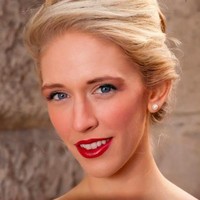
This interview was conducted by Adi Soozin, Best-selling author of Tools of Marketing Titans™, Managing Partner of Heritage Real Estate Fund, creator of Molo9.com.
If you are looking to build your name as an industry titan, we would love to help you. Fill in this application to get started: 9×90.co/apply-now, or start with our emails on bite-sized, high-powered marketing tricks:
Listen to this episode using your favorite app
⚖️ Legal Disclaimer
All opinions expressed by the guests are their own. 9×90™ and its affiliates do not endorse or guarantee any specific outcomes discussed in this episode. This podcast is for informational and entertainment purposes only and does not constitute financial, legal, or investment advice. Listeners should conduct their own due diligence and consult with professional advisors before making any investment or business decisions. Nothing discussed in this episode constitutes an offer to sell, or a solicitation of an offer to buy, any securities. Any such offer or solicitation will be made only through official offering documents and to qualified, accredited investors, in accordance with applicable securities laws. The views expressed by guests are their own and do not necessarily reflect those of the host or 9×90™.
Come on the show
Fill in this application to apply to come on the 9×90™ show: https://9×90.co/apply-now/
Would You Like to Watch Another Episode? Yes, of course you would ⬇️⬇️⬇️⬇️⬇️⬇️⬇️⬇️⬇️⬇️⬇️